Perspective
In order to put McDonald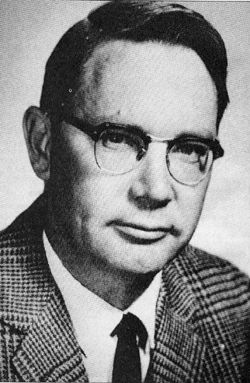 's involvement in the UFO
controversy in proper perspective it is necessary to view the controversy from its inception. Yet this itself is a
difficult task because the matter is complex, convoluted and strewn with half truths and falsehoods; there is really
no adequate way in which to adequately convey the flavor of the period from to in an
introductory chapter n1See David Jacobs
's involvement in the UFO
controversy in proper perspective it is necessary to view the controversy from its inception. Yet this itself is a
difficult task because the matter is complex, convoluted and strewn with half truths and falsehoods; there is really
no adequate way in which to adequately convey the flavor of the period from to in an
introductory chapter n1See David Jacobs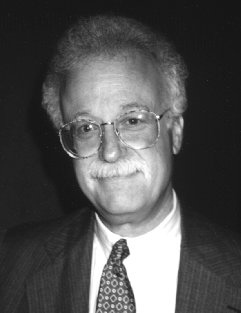 , The UFO Controversy in
America, Indiana University Press, 1975, for an excellent discussion of this period. But it is possible
to cover some of the important events and in the process attempt to communicate something of the atmosphere which
pervaded the subject at the time McDonald began his work in
. It would appear that the best way to briefly go about this is to first present a discussion of
the general nature of the phenomenon reported since about and then indicate the response to it by
the Air Force, the scientific community and the layman.
, The UFO Controversy in
America, Indiana University Press, 1975, for an excellent discussion of this period. But it is possible
to cover some of the important events and in the process attempt to communicate something of the atmosphere which
pervaded the subject at the time McDonald began his work in
. It would appear that the best way to briefly go about this is to first present a discussion of
the general nature of the phenomenon reported since about and then indicate the response to it by
the Air Force, the scientific community and the layman.
The phenomenon
Although there have been efforts to relate the post World War II UFO phenomenon to the foo-fighters (balls of light seen by fighter pilots) of
World War II, the airship wave of 1897, Medieval accounts
of things seen in the sky and the miraculous events recounted in the Bible n2See Jacques Vallée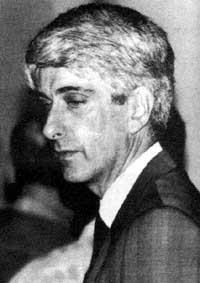 , Anatomy of a Phenomenon, H. Regnery Co., Chicago, 1965, for
our purposes this kind of information is too esoteric and the links too tenuous for it to be relevant to setting the
stage for McDonald's entrance. We can be content to engage the
subject in when it first came to the attention of the American public as a result of the
publicity afforded the sighting made by Kenneth Arnold
, Anatomy of a Phenomenon, H. Regnery Co., Chicago, 1965, for
our purposes this kind of information is too esoteric and the links too tenuous for it to be relevant to setting the
stage for McDonald's entrance. We can be content to engage the
subject in when it first came to the attention of the American public as a result of the
publicity afforded the sighting made by Kenneth Arnold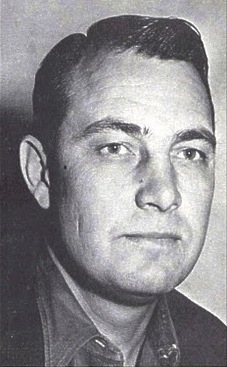 as he
flew his plane over Mt. Rainier, Washington, on . Arnold allegedly saw eight disc-shaped objects flying at an estimated 1500 miles
per hour. The disc shape, somewhat similar to an inverted saucer on top of an upright saucer, soon became the
prototype description as reports accumulated. Of course, many other shapes and variations on the saucer prototype,
as well as the classic unidentified "light in the sky" have also been described.
as he
flew his plane over Mt. Rainier, Washington, on . Arnold allegedly saw eight disc-shaped objects flying at an estimated 1500 miles
per hour. The disc shape, somewhat similar to an inverted saucer on top of an upright saucer, soon became the
prototype description as reports accumulated. Of course, many other shapes and variations on the saucer prototype,
as well as the classic unidentified "light in the sky" have also been described.
J. Allen Hynek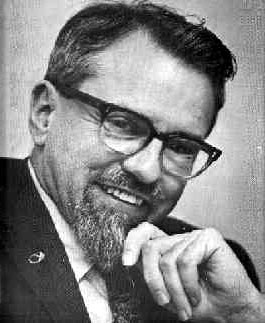 , Chairman of the Department of Astronomy at
Northwestern University, has provided us with a typology of UFO reports which is useful for obtaining an initial
grasp of the data. His typology consists of: nocturnal lights, daylight discs, radar-visual reports, close encounters of the first kind, close encounters of the second kind and close encounters of the third kind.
, Chairman of the Department of Astronomy at
Northwestern University, has provided us with a typology of UFO reports which is useful for obtaining an initial
grasp of the data. His typology consists of: nocturnal lights, daylight discs, radar-visual reports, close encounters of the first kind, close encounters of the second kind and close encounters of the third kind.
Nocturnal Lights are the most common UFO
report and consist of unidentified lights in the night sky. As a class of reports they are numerically large, but
evidentially not as significant as the other types. Hynek
argues that :
The typical Nocturnal Light is a bright light, generally not a point source, of indeterminate linear size and of varying color but most usually yellowish-orange, although no color of the spectrum has been consistently absent, which follows a path not ascribable to a balloon, aircraft, or other natural object and which often gives the appearance of intelligent action. The light gives no direct evidence of being attached to a solid body but presumably may be.
The Daylight Disc, on the other hand, provides much more information to the researcher .
The object (often objects in pairs) is variously described as oval, disc-shaped, "a stunted dill pickle," and ellipsoid. It generally is shiny or glowing (but almost never described as having distinct point source lights), yellowish, white or metallic. It exhibits in most cases what we would anthropomorphically describe as "purposeful" directed motion, with the ability to accelerate extremely rapidly. No loud sound or roars seem to be associated with Daylight Discs; sometimes there is a faint swishing sound.
As we move through the typology the evidence claims UFO researchers are prepared to make for their data increases. The Radar-Visual report consists of an observation made both with instrumentation and visually by one or more witnesses .
...it can be said that the radar operator observes a blip on his screen that, he avers, is definite, is akin to the type of blip given by a large aircraft, is not the result of malfunction, and does not resemble "weather phenomena." A visual sighting is characteristically a light, or possibly a formation of lights strikingly unfamiliar to the observer, with generally only a suggestion, if that, of an object dimly outlined by the brightness of the lights. The speeds involved are invariably high, but combinations of high speeds at one time and hovering at another are not uncommon. Reversals of motion and sharp turns, not abrupt 90-degree turns, are characteristic of Radar Visual cases.
The Close Encounter cases are the most impressive from the viewpoint of the researcher. A brilliant light or object
is seen within 500 feet, sometimes much closer, to the observer, although in Close Encounters of the First Kind there is
no interaction between the percipient and the stimulus. Hynek
describes a prototype thusly :
Brilliant luminescence, relatively small size (of the order of tens rather than hundreds of feet), generally oval shape--sometimes capped with a dome-absence of conventional wings, wheels or other protuberances, and ability to hover and to accelerate very rapidly to high speeds characterize the UFO at close encounter.
The Close Encounter of the Second Kind
does not differ from the Close Encounter of the First Kind except that the stimulus interacts with the environment
in some way and leaves physical effects. Hynek States :
The physical effects reportedly include tangible marks on the ground that can remain in evidence for days or even months and come ostensibly from physical contact of the craft with the ground, the scorching or blighting of growing things (particularly plants and trees), discomfort to animals as evidenced by their behavior, and such physical effects on the human observer as temporary paralysis, numbness, a feeling of heat, and other discomfort. Interference with the local gravitational field is sometimes also reported, as evidenced by the reports of some observers of temporary feelings of weightlessness or other inertial effects, as though the well-known laws of inertia had been temporarily abrogated.
One remarkable reported physical effect involves interference in electrical circuits, causing car engines to cease functioning temporarily, radios to cut out or to exhibit uncommon static, car headlights to dim or be extinguished for a short while, and, on occasion, car batteries to overheat and deteriorate rapidly.
| Years | Reports |
|---|---|
| 122 | |
| 156 | |
| 186 | |
| 210 | |
| 169 | |
| 1501 | |
| 509 | |
| 487 | |
| 1955 | 545 |
| 670 | |
| 1006 | |
| 627 | |
| 390 | |
| 557 | |
| 571 | |
| 474 | |
| 389 | |
| 562 | |
| 887 |
The Close Encounter of the Third Kind is
even more bizarre, for it involves the reporting of the presence of an animated creature as part of the UFO
observation. Hynek does not provide much of a prototype, he
says :
They differ from other close encounter cases only by definition, by the reported presence of occupants, (in or about the craft) and by the fact that these encounters are not as frequently reported by highly trained and sophisticated people as are other close encounters.
Up to this point the qualitative aspects of the phenomenon have received attention. Let's now turn to the quantitative. Below is a table indicating the number of sightings of all types reported to the Air Force from to . These reports are almost exclusively domestic, but a few from American bases abroad are also included (see Table I). This does not mean the phenomenon itself is primarily domestic, on the contrary it is global in its scope. However, international communication about the problem and knowledge of foreign research itself is so limited that it is wise at this point to treat the American experience in isolation. Suffice it to say that reports of the same sort of data exist throughout the world.
Although Hynek's typology encompasses that aspect of the UFO
phenomenon which he believes represents legitimate data, there is another component to the problem which most
investigators conceive of as illegitimate, but because it is so bizarre it has received more that its share of
attention and consequently, according to many UFO researchers, has had a disproportionate and unfavorable effect on
the study of the UFO problem. It is the contactee issue.
The contactee issue
Hynek spoke of occupants in his prototype of the Close Encounter of the Third Kind. However, he
was unwilling to entertain contactee reports. In the lexicon of Ufology the former consists of observations of, but
not interactions with, alleged UFO occupants, while the latter consists of definite interaction with the occupants,
often of a religious or semi-religious nature and often including claims of trips to other planets and/or assertions
that the observers themselves are from other planets. The circus-type atmosphere which these reports created
flourished in the 1950s and continues to exist to some degree. A few of the better known of the contactees were
George Adamski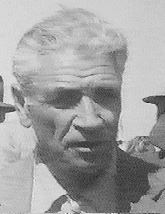 , Truman Bethurum, Daniel
Fry, Orfeo Angelucci
, Truman Bethurum, Daniel
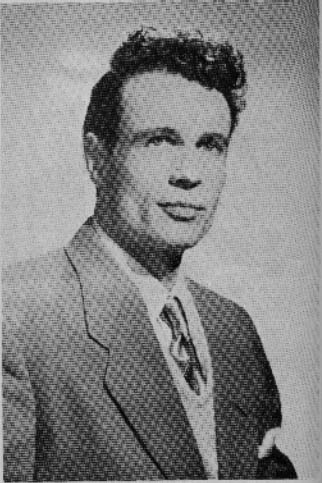
Fry, Orfeo Angelucci , Howard Menger
 and Gabriel Green
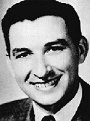 . They all wrote books and/or had followings based upon the extraterrestrial
messages of doom or salvation which they profferred n3See Jacobs for an excellent discussion of the backgrounds of these men and the beliefs
they put forth. They attracted a great deal of attention and regardless of the merits of the data
enumerated by Hynek, data which serious UFO investigators
claimed was, and is, anomalous, the contactee cults distracted interest from
those data and increased the probability that the scientific community would view the UFO question as a nonsense problem and not submit it to rigorous scrutiny.
. They all wrote books and/or had followings based upon the extraterrestrial
messages of doom or salvation which they profferred n3See Jacobs for an excellent discussion of the backgrounds of these men and the beliefs
they put forth. They attracted a great deal of attention and regardless of the merits of the data
enumerated by Hynek, data which serious UFO investigators
claimed was, and is, anomalous, the contactee cults distracted interest from
those data and increased the probability that the scientific community would view the UFO question as a nonsense problem and not submit it to rigorous scrutiny.
The Air Force response
Soon after the initial American UFO observations in the Air Force as the defender of American air space took the responsibility to look into the problem and determine whether these events jeopardized the national security of the United States. Because earlier observations made in were over Sweden the fear existed that they were actually tests of Russian missiles which could, if they had intercontinental range, change the complexion of the embryonic cold war.
The Air Force maintained the sole official responsibility for explaining UFO data between and . Volumes could be written on this subject alone. However, such detail is not necessary for the purposes of this study. What is important is that the Air Force staffed a small investigatory project which from to was called Project Sign, from to was named Project Grudge and from to bore the code name Project Blue Book. The reports and press releases of each of the projects assured the public that the sightings were not a threat to the national security and could be explained as misidentifications of stars, planets and man-made objects, or were natural atmospheric phenomena, or hoaxes . The Air Force adhered to this public position for 22 years until the closing of Blue Book in .
The Air Force made its pronouncements against a background of claims that it did so after careful investigation of sightings with the aid of some of America's finest scientific talent. The implication for members of the scientific community became obvious. The Air Force, through the use of the ample scientific muscle at its disposal, could readily explain the UFO sightings which perplexed the untrained layman.
The academic response
To the practicing scientist this meant that further work on the problem was unnecessary. This attitude received
further reinforcement in the 1950s by the only academically produced treatise on the subject. A noted Harvard
astronomer, Donald Menzel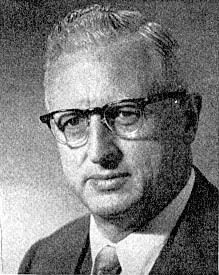 , produced a volume entitled Flying
Saucers . Menzel pursued his UFO work very differently from the way in which he did his astronomy. Rather than trying to explain sightings
by investigating them, i.e., interrogating witnesses, looking for possible causes for each event, etc., he authored
a book containing examples of the various ways in which the atmosphere could produce a shining sphere-like or
elliptical-shaped phenomenon which could fool the untrained observer. In so doing he produced the equivalent of an
atmospheric optics text for the layman. However, he never confronted the data; he only offered possible explanations
while assuming that UFOs were a nonsense problem. Nevertheless, his book became the definitive academic work on the
subject during the 1950s and as such carried considerable weight among scientists.
, produced a volume entitled Flying
Saucers . Menzel pursued his UFO work very differently from the way in which he did his astronomy. Rather than trying to explain sightings
by investigating them, i.e., interrogating witnesses, looking for possible causes for each event, etc., he authored
a book containing examples of the various ways in which the atmosphere could produce a shining sphere-like or
elliptical-shaped phenomenon which could fool the untrained observer. In so doing he produced the equivalent of an
atmospheric optics text for the layman. However, he never confronted the data; he only offered possible explanations
while assuming that UFOs were a nonsense problem. Nevertheless, his book became the definitive academic work on the
subject during the 1950s and as such carried considerable weight among scientists.
In he followed it with a second book entitled The World of Flying Saucers written with
Lyle Boyd . He drafted it in the same vein,
treating the entire UFO phenomenon as preposterous pseudoscience.
However, Menzel did get closer to the data, not through personal
investigation of cases, but by gaining access to and explaining away official Air Force UFO reports from the Project Blue Book files. This book further ensconced Menzel as the definitive academic word on UFOs.
Consequently, prior to academics did very little to elucidate the UFO problem. Two UFO groups,
the National Investigations Committee on Aerial Phenomena (NICAP) and
the Aerial Phenomena Research Organization (APRO) used some scientists
and engineers as investigators, but no one made a concerted effort to examine the data. Two possible exceptions to
this generalization, however, were J. Allen Hynek, at
Northwestern University, and his protege Jacques Vallée. Because Hynek began his Air Force consulting
with Project Sign in and maintained
that relationship through he could claim closer ties to the UFO phenomenon than any other
scientist. Yet, regardless of what he believed about the significance of the observations during those years. It
was not until that he began publicly to take the position that the data deserved closer scrutiny.
On the other hand, Jacques Vallée while ostensibly Hynek's protege wrote considerably more about the UFO phenomenon. In
he published Anatomy of a Phenomenon and in with
his wife Janine he penned Challenge to Science; the UFO Enigma . In both volumes he took a more systematic look at the UFO problem than had been
previously attempted and tried to interest the scientific community in looking at the data. Nevertheless, for all
practical purposes there was no UFO research taking place in the academic community prior to
.
The public response
The response which the phenomenon evoked from the public proved detrimental to scientific activity in the short run, but if the data should prove anomalous, will be very important to the scientific response in the long run. This is because the public in the form of various authors, UFO groups and charlatans initially helped to frighten off rigorously trained investigators, yet these same individuals kept the UFO question alive, chronicled the data, and overcame Air Force efforts to inter the subject.
Former Marine Major Donald Keyhoe began it all in and developed into the most influential layman in the area. He published an article in True Magazine for in which he claimed there was more to the UFO problem than the Air Force claimed and hypothesized an extraterrestrial explanation . Thus Keyhoe gave extensive exposure to both the extraterrestrial and conspiracy hypotheses. He elaborated on these ideas in books which appeared in , , , and . Each one enjoyed good sales which helped make the UFO problem a topic of general conversation. Of course, Keyhoe was not alone. Scores of authors wrote UFO books in the period to , but Keyhoe remained the most authoritative sounding as a result of his "Pentagon connections," and probably the most widely read.
Many privately funded UFO organizations were formed during this time, however, only two still survive. The Aerial Phenomena Research Organization (APRO) began in under the direction of Coral Lorenzen, while the National Investigation Committee on Aerial Phenomena (NICAP) formed in with Harrison Brown as its head. Both functioned primarily as repositories for UFO sighting reports while they attempted to obtain a hearing for the data before the scientific community. Each recruited individuals on an international basis to investigate sightings and forward the ensuing reports to national headquarters; for APRO Tucson, Arizona, and for NICAP Washington, D.C. The NICAP group reorganized under the leadership of Donald Keyhoe ( to ), attacked the Air Force vigorously and constantly lobbied on Capitol Hill for Congressional Hearings on the UFO question. On the other hand, the APRO leadership, recognizing the inadvisability of trying to attack the Air Force from its remote Tucson base of operations, concentrated instead on fostering an image of a research-oriented organization. In fact, neither group did much research other than that done by the field investigators. Investigators wrote up and filed reports running into the tens of thousands over the years, but due to a lack of funds the research endeavor never went much further. Consequently, the groups developed their data bases, published newsletters and made very few converts in the scientific community.
The contactees referred to above, along with various charlatans and hucksters, did much harm to the attempt to acquire scientific legitimacy for the UFO phenomenon. The relatively quiet, by and large non-sensational, efforts of NICAP and APRO took a back seat to the bizarre tales of those individuals only interested in making a fast dollar from the excitement generated by UFO reports. As a result as time passed the first thought that crossed people's minds when the subject of UFOs arose was "little green men." This was obviously the last thing on the minds of the few serious researchers in the field, but it is representative of the type of image that had to be altered if the scientific community was going to consider the subject a legitimate topic of inquiry.
Therefore, we can see that between and there were a number of factors working to keep UFO data
from undergoing scientific scrutiny. The Air Force had consistently written the matter off for 18 years. With these
assurances, as well as those from Donald Menzel of Harvard,
most scientists found no need to delve further into the problem. Moreover, this conclusion was additionally
reinforced by the conspiracy claims of Keyhoe and various
contactee and charlatan assertions which most reasonable men viewed as fraudulent.
The problem
Briefly elucidating these salient aspects of pre-1966 UFO lore prepares us to embark on our case study in the strategy and practice of borderland science. I suspect what is observed in this instance is a slightly exaggerated version of the manner in which "science as usual" is conducted. This exaggeration appears to have two causes. The first concerns the perquisites of the scientific profession which are at stake. That is, if UFO data achieved respectability the scientists responsible, particularly if the extraterrestrial hypothesis (ETH) were assumed, would never have to go begging for research funds again. The second cause for exaggeration involves the restructuring of world views necessary to accommodate the hypotheses generally advanced to explain UFO data by those who believe it has significant scientific and social import. In other words, the ramifications of accepting UFO sightings as new observational data are much greater than those customarily encountered by the scientist in his daily work. Viewed as a political problem it is concerned with how scientists interact when confronted with a potentially anomalous phenomenon and at the same time it raises the issues both of how knowledge grows and of who gets what, when, where and how in the scientific community?
The term "anomalous phenomenon" is used here for lack of a better one. Ordinarily an anomalous observation is one
which does not fit into existing theories or frameworks of analysis. What is denoted here is a special case within
this class. It is an observation which, according to Kuhn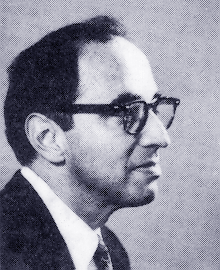 ,
is potentially a cause of a paradigmatic shift in whatever discipline it occurs . To accommodate it, entire world views
must be revised, it is not enough to "fudge a little" or extend already extant conceptions of reality. These
conceptions must undergo extensive revision or be shelved entirely. This distinction between the routine and the
revolutionary discovery is made explicit by Blackwell. The routine discovery is made within the confines of
previously established knowledge, while the revolutionary discovery is made outside these confines and results in a
genuine upheaval of scientific thinking . When the possibility of such an event is in
the offing the politics of science associated with it tends to become more visible.
,
is potentially a cause of a paradigmatic shift in whatever discipline it occurs . To accommodate it, entire world views
must be revised, it is not enough to "fudge a little" or extend already extant conceptions of reality. These
conceptions must undergo extensive revision or be shelved entirely. This distinction between the routine and the
revolutionary discovery is made explicit by Blackwell. The routine discovery is made within the confines of
previously established knowledge, while the revolutionary discovery is made outside these confines and results in a
genuine upheaval of scientific thinking . When the possibility of such an event is in
the offing the politics of science associated with it tends to become more visible.
The politics of science
Political scientists generally conceive of the politics of science in terms of the relationships between government and science. The areas of principal emphasis have been the impact of government on science, the scientist as decision-maker, and the scientist and foreign policy. A few examples should serve to illustrate this.
A number of studies speak to the question of government impact on science. Price discusses the problems arising from the growth of the federally funded post World War II scientific establishment , while Reagan examines the funding policies of the federal government with respect to scientific research . In the same area Knorr and Morgenstern address themselves to policy questions related to the management of military research and development in the United States .
Several authors treat the scientist as a decision-maker. In this respect Wohlstetter considers the effect scientists have on decisions concerning national and international security and Schilling explores President Truman's decision to pursue development of the H-Bomb . Gilpin directs his inquiry to the dispute which developed in the scientific community over the nuclear test ban treaty , while the influence of scientists on policy-making in the executive branch is appraised by Schooler .
With regard to foreign policy Schilling outlines the recent history of the scientist in the policy-making process and Skolnikoff illustrates the importance of scientific input to the Department of State decision-making process . Lastly, Nelson uses a study of the Pugwash Conference to indicate the increased sensitivity on the part of scientists to international politics .
The personal politics of science
On the other hand, "the personal politics of science" encompasses the everyday interaction of scientists. This approach stresses the interpersonal strategies invoked by scientists in the pursuit of knowledge. It fleshes out the skeleton of scientific research to provide insights into the social processes underlying the formal outcomes which are found in scholarly journals and texts. In so doing this personal politics of science brings one to a better understanding of both the context of discovery and validation. Unlike the traditional politics of science it is concerned with the micro-analysis of the behavior of scientists. Although governmental and scientific institutions play a role, the primary actors in such analyses are the scientists themselves. The point of such endeavors is to break out of the time-honored myth which portrays the scientist as a disinterested observer who, with respect to his research, is neutral both in the laboratory and in the world.
For example, DeGrazia chronicles the treatment given Immanuel Velikovsky and his work by the scientific community. He concentrates on
the interactions of Immanuel Velikovsky with his critics, the
scientific journals, book publishers and other academics . This personal approach
to the politics of science is also utilized by Greenberg. He takes advantage of the knowledge he acquired as an
assistant editor of Science to explicate the history of the politics of what he calls pure science
in
the United States. He places emphasis on the period just prior to World War II through in a
discussion directed toward which scientists wanted what projects, where, and why . In a similar
(personal) vein Barber points out that while literature exists which explores political, technological, economic
and religious resistance to new ideas in science, virtually none probes resistance to new discoveries on the part of
scientists themselves. He goes on to provide examples of this phenomenon .
The growth of knowledge
There is another stream of literature which converges on these same problems from the perspective of the sociology
and history of science. It is concerned with the manner in which knowledge grows . The building bloc notion has been generally accepted until quite recently. In essence this hypothesis
suggests that knowledge grows progressively and incrementally, each new idea following logically from that which
has gone before. However, this is not the only position in the literature. According to Kroeber it is the
exhaustion of ideas in one area of research which leads to new problems or orientations and the concomitant growth
of knowledge . The identical outcome is produced by a series of "micro-revolutions" if the argument of
Toulmin is accepted. He claims that old theories are not discarded in crisis periods, as Kuhn would have us believe, but rather changes are made in the basic
assumptions. Later the "so-called" old theories are reintroduced or surface in other disciplines .
The concept of growth accepted by Crane and Ziman
is that of Kuhn
which was later reinterpreted by Masterman and thus accepted by Kuhn . Kuhn asserts that periods of science-as-usual, what he calls
normal science
, are interspersed with periods of crisis and then revolution. Once a revolution occurs a
paradigm develops in a discipline, or a part thereof, which attracts scientists to it and permits normal science to
continue again. Crisis is precipitated by problems insoluble within the old paradigm. Revolution is the "breaking
out" of the old paradigm and the formation of a new one in order to resolve crisis-causing problems. The definition
of paradigm is not clear, but Masterman presents three usages gleaned from Kuhn's work:
- metaphysical, a world view
- sociological, a universally recognized scientific achievement
- an artifact or construct which provides tools for specific problem-solving
Beyond the range of all of these usages anomalies may occur which could lead to crisis within a discipline and eventual revolution. The growth of knowledge, then, is portrayed as a cyclical process.
An aspect of this process which the proponents of all of these hypotheses fail to entertain is the political
component. Although Crane comes close, by citing the cognitive and social constituents of knowledge growth , and Kuhn even uses
the revolutionary analogy to describe his paradigm shift , they nonetheless neglect the political.
It is at that point where this research takes advantage of both the personal politics of science literature and the growth of knowledge hypotheses to suggest how scientific growth, of a revolutionary nature, occurs, not only at the abstract level of theory, but also at the real world level of the scientific arena. The Kuhnian model of growth seems potentially the most appropriate to the UFO phenomenon. It has an appeal regardless of which conception of paradigm one chooses to adopt. For it is a paradigm shift which is necessary, if the UFO phenomenon is truly anomalous, to transform the scientific climate of opinion toward the subject and foster interest in it. Either a change in world view, a critical experiment, or some application of new, or heretofore unused, instrumentation for observational purposes, is required to change the research picture vis-a-vis the subject. This is necessary because research cannot go forward as long as the subject is deemed illegitimate.
The scientific process as a political process
To understand the efforts which have been made in this direction it is constructive to conceive of the scientific
process as a political process. While this is heresy to the positivist, it is fundamental to bridging the gap
between paradigms. As Kuhn points out there is always
resistance to new ideas from the old guard. In some instances it is overcome, in others the younger generation of
scientists is forced to wait for the older generation to die off before acceptance of the new ideas can occur.
However, Kuhn does not give much consideration to the nature
of the struggle to obtain acceptance. The struggle results from the incommensurability of the old and the new
paradigm. Each carries with it a set of criteria for evidence claims and acceptable methods of validation.
Unfortunately, the criteria and methods of the new paradigm may not be admissible under the standards of the old.
Since the latter has proven itself many times in the past and its adherents, who are legion, have world views and
careers securely anchored within it, resistance to the new paradigm develops. Yet, because the standard bearers, of
each do not accept one another's basic assumptions about the world and/or how to do research they can only talk at,
not with, one another; intersubjectively verifiable claims are not possible because the followers of each approach
speak different languages. When such a situation exists the outcome becomes a matter of persuading those of the old
school to accept the new. Kuhn is cognizant of this and
points out that proponents of the new paradigm try to make their case by showing that their paradigm solves the
problems which had previously caused a crisis, predicts further unexpected solutions to other problems and is more
aesthetically pleasing than its predecessor. However, Kuhn
does not see this as a political process and does not elaborate on it.
In fact, he admits that the research which could throw light on the conversion question has not been done. I believe this attempt to gain acceptance can usefully be viewed as politicking, often in a revolutionary way, for purposes of securing an assenting constituency. These behaviors, and those related to them, constitute the personal politics of science of this study.
The scientific process and the scientific method
We are well under way to grasping this concept if we define the scientific process as any and all behaviors engaged in by scientists to further their science-related interests. This is a considerable embellishment of the concept of scientific method which is usually used interchangeably with scientific process. When traditionally used it consists of an objective scientist hypothesizing an outcome, doing an experiment, collecting the resulting data, interpreting the outcome and writing up the findings for publication. The result of the above expanded definition, on the other hand, is to suggest that science consists of much more than what scientists do in their labs or report in books and journal articles. The scientific process viewed as a political process does not conceive of the scientist as neutral, but rather as an advocate. He has a position with respect to the problems he studies, possibly to a greater extent on controversial issues, and he desires to promulgate this position. Therefore, he engages in behaviors which he believes will foster his substantive findings, argumentation and other research ends. These behaviors are political and constitute the tactics of the strategy which he feels will best serve to resolve the issue which is at stake. This view, then, enlarges the repertoire of activities which comprise the scientific process and makes it possible to speak of the scientist as a political actor.
This orientation has certain distasteful aspects to some. For instance, it makes the behaviors associated with the scientific method, namely those enumerated above, a subset of the behaviors included in the scientific process. The figure which appears below serves to illustrate this. The schematic itself is the scientific process. It consists of the scientific method represented by the behaviors in the inner box and the associated political activities shown peripherally outside the inner box. The latter are not intended to be all inclusive, but should serve as a useful heuristic.
Another difficulty with this enlarged conception of the scientific process is that it permits individuals other than scientists to participate. This implication should not be interpreted as a covert means of legitimating as scientific the actions of those who take part in the scientific process, but who are not scientists; for this is not the intention of the definition. An individual can be a party to the scientific process without the necessity that the inference be drawn, either that he is a scientist, or that his work is scientific. For these labels are reserved for the professional scientist in the first instance and for anyone who adheres to the scientific method in the second instance.
|
||||||||||||||||||
The elaboration of the normal scientific process definition is a means to a better understanding of the personal
politics of science. Informally it has existed since the first scientist penned a biography. In reading The
Double Helix or Lawrence and Oppenheimer , for
instance, all of the above is implicit, but not elaborated. The McDonald UFO case study which follows is a detailed examination of selected
aspects of one man's attempt to force a paradigm shift on the American scientific community. The ramifications would
have been of major import to society if McDonald had proved
successful. Few areas of life would have remained unaffected, at least in the industrialized world; space budgets,
military budgets, priorities at all levels would have undergone reassessment along with life styles, careers, and
cosmological orientations. That McDonald failed is not to say
that he was wrong, nor that the issue is no longer joined. Neither is it to imply that he was correct and championed
an idea whose time had not come. The UFO phenomenon is a thorny issue, not readily amenable to scientific
investigation; the controversy continues, but is smoldering, rather than burning. Only time will tell if James McDonald pursued, in his own words, the most important
scientific problem of our time
, or a will-o'-the-wisp.
In either case, a great deal can be learned about the behavior of scientists when paradigms are at stake from the analysis of his attempt to legitimate the study of the UFO phenomenon. In particular, we can better understand, at least in this case, how a scientist tried to bridge the chasm between an old and a potentially new paradigm.